The Pikler Triangle, Explained
A Pikler triangle channels a toddler's relentless urge to climb into something safe and skill-building. Here is what it is, why it works, the right age and safety rules, how to choose one, and the foldable climber we stock and stand behind.
What a Pikler triangle is
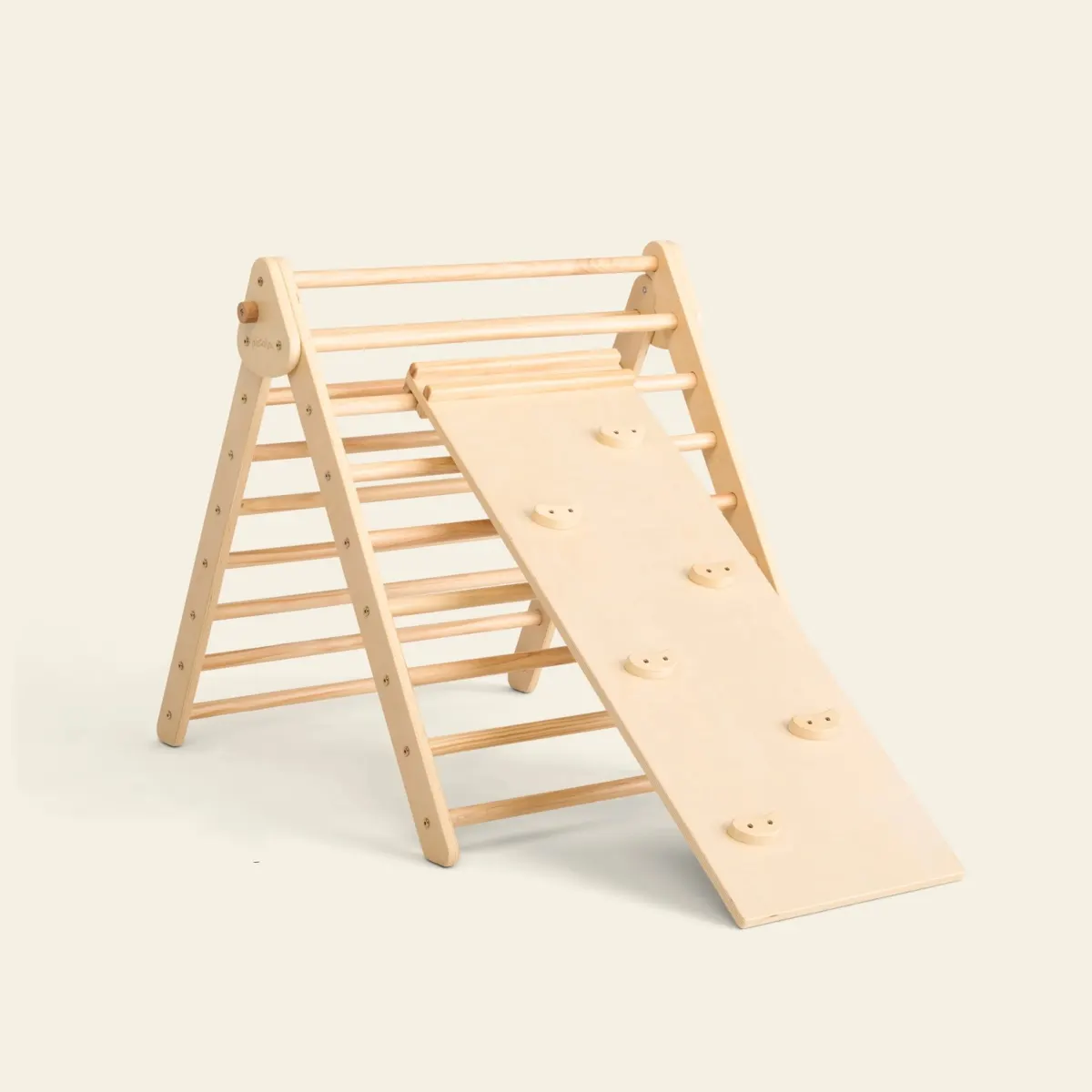
A Pikler triangle is a free-standing wooden climbing frame shaped like an A-frame ladder. It was developed by Emmi Pikler, a Hungarian pediatrician whose central idea was that children develop motor skills best through free, self-directed movement rather than being placed into positions or hurried along. The triangle gives that philosophy a piece of furniture: an open invitation to climb that the child controls entirely.
Why it works
Toddlers are biologically driven to climb, the question is only what they climb. A Pikler triangle gives that drive a legitimate target and, in doing so, builds real skills: balance, body awareness (proprioception), motor planning, grip strength, and the confidence that comes from solving a physical problem unassisted. Because the child climbs only as far as they can manage on their own, they rarely get into a position they cannot handle, which is the safety logic baked into the design.
The right age to start
Most children begin interacting with a Pikler triangle around 9 to 12 months, first pulling to stand against the lowest rungs, then climbing a step or two. Real climbing and traversing tends to arrive between 12 and 24 months, and imaginative use (a cave, a slide with a ramp accessory, a fort) carries it well into the 3 to 5 range. Treat these as windows, not deadlines; follow the child's own readiness and never place them higher than they climbed themselves.
Safety, honestly
A Pikler triangle is safe used the way it is meant to be used: supervised, on a soft surface (a rug or play mat), at a size matched to the child, and with the strict rule that the adult never lifts the child onto it. Self-paced climbing is the safeguard, a child who climbed up unaided can almost always get down. Check the structure is stable before each session, mind the maximum weight rating, and fold or store it away from unsupervised access if you have a determined early riser.
How to choose one
Three things matter most. First, foldability: a triangle that collapses flat against a wall is the difference between a daily-use toy and resentment in a normal-sized home. Second, size and adjustability, a smaller mini climber suits the 9-month to ~3-year core window, while larger or adjustable frames stretch the upper age. Third, build quality: solid hardwood, smooth rungs, a tested weight rating, and a finish that survives daily climbing. A ramp or arch accessory is the single best add-on for extending the age range and the play.
The Pikler triangle we stock
A foldable mini climber that ticks the three things that matter: folds flat, hardwood build, and a 9-month-to-5-year span.
More climbing toys for toddlers
Pieces that pair naturally with a Pikler triangle for a full indoor gross-motor corner.
Piccalio · Physical Activity
Mini Pikler Climbing Triangle
Foldable wooden climber that satisfies the urge to climb everything.
Piccalio · Physical Activity
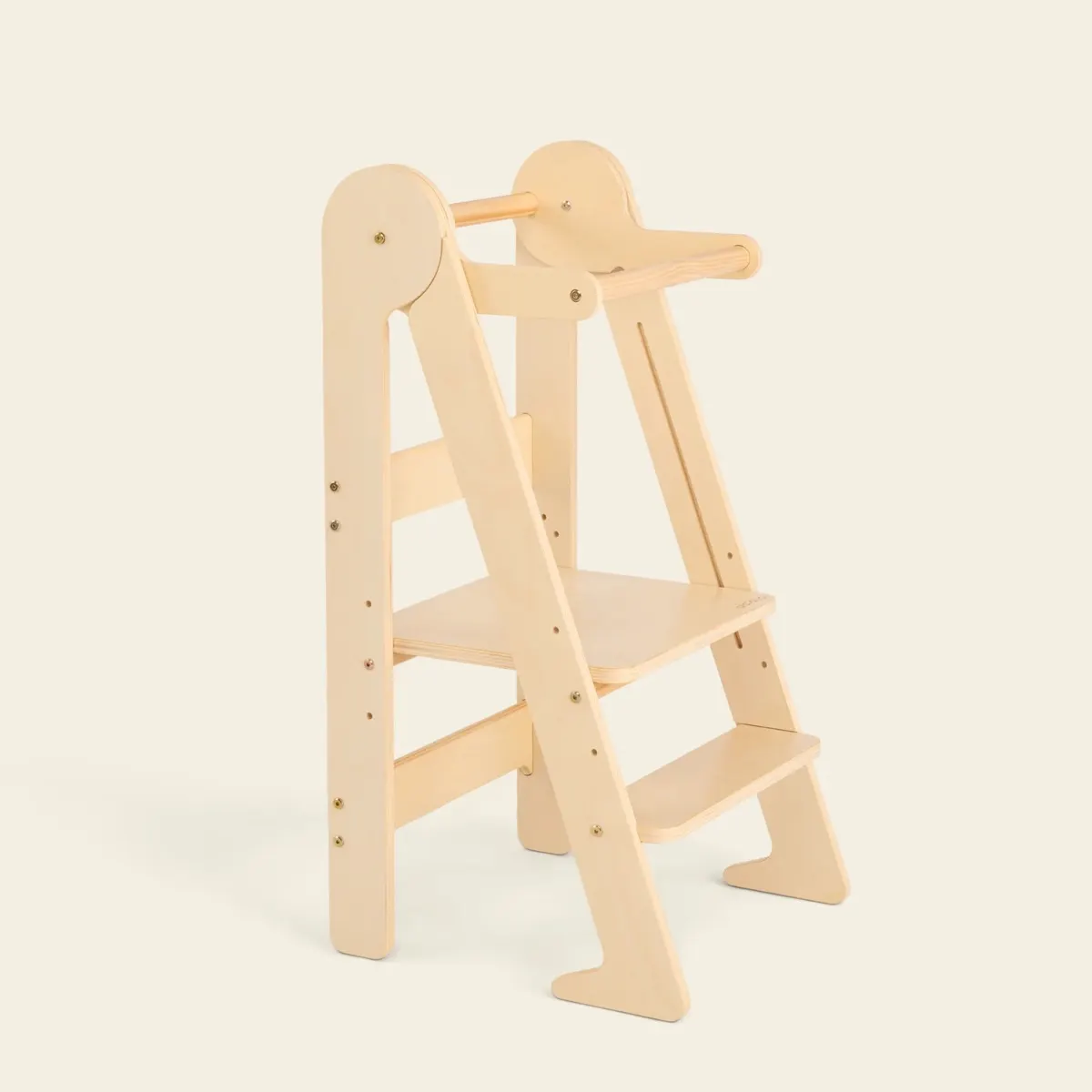
Foldable Kitchen Helper Tower
The safe way to bring a toddler up to the counter to help.
Wobbel · Physical Activity
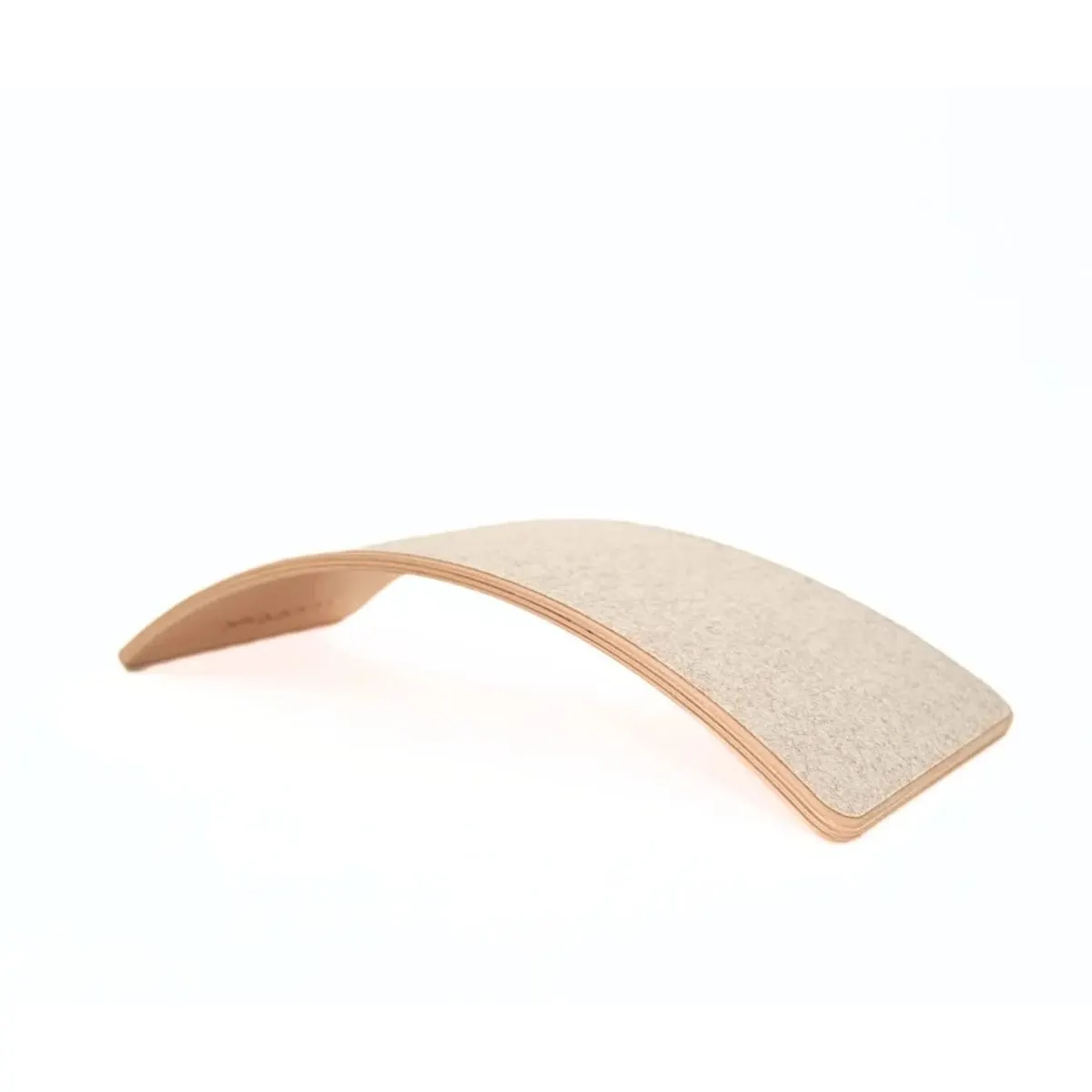
Original Balance Board
A curved board that is a balance trainer, then a bridge, boat, and slide.

Piccalio · Physical Activity
Play Mat
A premium foam floor surface for tummy time, rolling, and first standing.
Keep exploring
Frequently Asked Questions
What is a Pikler triangle?
A Pikler triangle is a wooden climbing frame, an A-shaped ladder structure, designed by Hungarian pediatrician Emmi Pikler to let young children climb safely at their own pace. It channels a toddler's natural urge to climb into a controlled, skill-building activity instead of the couch or bookshelf.
What age is a Pikler triangle for?
Most children start pulling up and exploring a Pikler triangle around 9 to 12 months and keep using it, in increasingly complex ways, up to about 5 years. The early use is pulling to stand and the first rungs; later it becomes full climbing, sliding, and imaginative play with a ramp accessory.
Are Pikler triangles safe?
Used as intended, with supervision, soft flooring beneath, and an age-appropriate size, they are designed around safe, self-paced climbing, the Pikler principle is that a child should only climb as high as they can get to unassisted. Never place a child on it; let them climb themselves. Always supervise and follow the manufacturer's weight and age guidance.
Are Pikler triangles worth it?
For an active toddler in a home without easy outdoor access, a foldable Pikler triangle earns its footprint: it redirects dangerous climbing, builds genuine gross-motor and planning skills, and spans roughly 9 months to 5 years across multiple children. The foldable versions store flat against a wall between sessions, which is the difference between owning one and resenting it.
What is the difference between a Pikler triangle and a climbing toy?
A Pikler triangle is a specific Montessori-aligned climbing frame focused on self-paced ascent. Broader climbing toys for toddlers include arches, ramps, balance boards, and step-and-slide sets. Many families pair a Pikler triangle with a balance board or ramp to extend the play and the age range.